
When Billows Roll
Psalm 42:7-11

Read
V. 7-10 When Billows Roll
7 Deep calls to deep
at the roar of your waterfalls;
all your breakers and your waves
have gone over me.
8 By day the Lord commands his steadfast love,
and at night his song is with me,
a prayer to the God of my life.
9 I say to God, my rock:
“Why have you forgotten me?
Why do I go mourning
because of the oppression of the enemy?”
10 As with a deadly wound in my bones,
my adversaries taunt me,
while they say to me all the day long,
“Where is your God?”
Explain
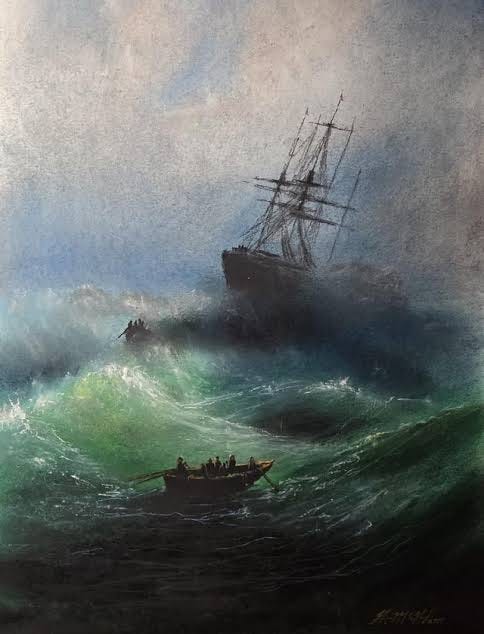
Look at how the psalmist keeps wrestling within himself. Look at verse 7. “Deep calls to deep at the roar of your waterfalls; all your breakers and your waves have gone over me.”
The Psalmist has called out to God; he is preaching the gospel to himself, and what happens? Does the darkness lift? Not yet. In fact, Psalm 42 presents things as getting worse. Why are you cast down, O my soul? Hope in God. As he finishes speaking, another wave of doubt and affliction casts him upon the rocks of turmoil. Maybe you have felt this way. When it rains, it pours. One thing after another. One step forward and two steps back. These are all clichés that describe this reality.
Think about Job. First, the Sabeans, a tribe of raiders, came and stole 500 of his oxen and sheep. Then, in the next verse, God sends fire from heaven and destroys 4000 of his sheep, killing his servants. Then the Chaldeans come and steal his camels, killing more of his servants. Then, in the next verse, a great wind comes by and knocks over a house while his children are in it, killing 10 of his children. When it looks like things cannot get any worse, Satan strikes Job with boils from the crown of his head to the soles of his feet. Then his own wife curses him and tells him to curse God and die.
Billows are rolling. Swell after swell of suffering. Can you relate to this? I can. Maybe not like Job, but if you live on this side of the fall, our whole natures are corrupted. No part of us is left untouched by the fallen creation.
Listen, beloved Christian, I can look across our whole congregation and cannot find a saint who has not experienced the rod of affliction in one way or another. God’s people have always been marked by hardship and trial. We fight not against flesh and blood, but against the flesh, the devil, and principalities of darkness. How do we trust in God when affliction comes, and our souls are sunken, and the darkness will not lift? What do you say to your soul?
Look at verse 8: “By day the Lord commands his steadfast love, and at night his song is with me, a prayer to the God of my life.” Keep confessing the truths and promises of God to your soul. By day, the Lord commands his steadfast love. God, your hesed love is for me. Whether I experience it or not, you do love me. I trust in you, and your love never fails. The clouds have descended upon me, but I know that above them all, the sun is shining. His rays are yet to find me, but one day they will dissolve the clouds like the night, and your countenance will be on me once more. The Lord commands his steadfast love by day. The Lord has commanded it. It is so, it is sure. I can trust in it, O soul that is downcast. You can trust in God. “And at night his song is with me, a prayer for the God of my life.” Even when I cannot see it or hear it. The Lord is singing over me, like how when Samuel is crying in his crib, I hold him close and sing over him. Even while he is screaming and fighting, I hold him tight and sing.
The Lord your God is in your midst, a mighty one who will save; he will rejoice over you with gladness; he will quiet you by his love; he will exult over you with loud singing. I will gather those of you who mourn for the festival, so that you will no longer suffer reproach.
Zep 3:17–18
Look at what else the Psalmist does: he brings his prayer before God. “I say to God, my rock: Why have you forgotten me? Why do I go mourning because of the oppression of the enemy? As with a deadly wound in my bones, my adversaries taunt me, while they say to me all the day long, ‘Where is your God?’”
Pray honestly to God. Do you feel forsaken? Tell the Lord. The Lord knows and hears your prayers, even when you do not feel them. You can even see the Psalmist’s faith in this prayer of pain. He calls God “my rock.” “God, you have always been my rock, a shelter from the storm, the solid ground beneath my feet; that is who you are. Lord, do not cast me off. Protect me from my adversaries.
V. 11 Hope in God
11 Why are you cast down, O my soul,
and why are you in turmoil within me?
Hope in God; for I shall again praise him,
my salvation and my God.
Look at how the Psalm ends. It ends with the same refrain. He keeps proclaiming the gospel to himself. This is the beauty of this psalm. The depression does not lift yet, but the psalmist keeps praying. He keeps applying God’s promises to his soul. So it should be with you. When the darkness does not lift, keep praying. Keep hoping in God. What is the alternative? Where else can we go? You, O Lord, have the words of eternal life.
Apply
Just Keep Singing
There is great hope for the Christian to know the Psalms sing through seasons of suffering. Just as in this psalm, we learn to keep praying while the billows of sorrow roll over us; we can also learn from the great psalmist to keep singing. This is a display of our faith, despite our circumstances. We are intentionally choosing to sing, first, because God remains worthy of our praise. Second, it is a display of our faith in spite of our circumstances.
Theology for the suffering
Psalm 42 is a deep well of theology for weary pilgrims. The Psalmist constantly reapplies the truths of God’s promises and theology proper to his own heart. What he knows about God, His unchangeable nature and character, bolsters his hope that in the midst of his suffering the Lord has not changed. His word remains, and His will shall come to pass.